
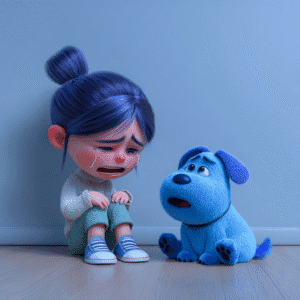
Why You’re Not Failing (Even If You Feel Like You Are)**
You’ve brought home a tiny, fluffy dream… and somehow ended up crying into a packet of digestives at 2 am while Googling “is my puppy broken or am I?”
If this sounds familiar, welcome.
You might be experiencing the puppy blues – that big, messy cocktail of overwhelm, exhaustion and “what have I done?” that hits thousands of new puppy parents.
And here’s the most important thing you need to hear:
You are not failing.
This is normal.
And it gets easier.
If you’re still choosing the right breed or thinking ahead for your next dog, try the Which Dog Breed is Best for Me? Quiz — a good match makes the early days smoother.
Pickles’ Aside: Puppies are cute, so you don’t return us. It’s strategic.
Why Puppy Blues Happen
New puppy owners often expect joy, cuddles and little sleepy sighs.
What they actually get is:
• disrupted sleep
• toilet training disasters
• feelings of regret
• biting that feels personal
• nonstop supervision
• unpredictable emotions
• a sense of “I wasn’t ready for this”
The puppy blues aren’t a character flaw.
They’re a completely normal response to:
• Massive lifestyle change
• Sleep deprivation
• Responsibility overload
• Hormonal and emotional stress
• Unrealistic expectations
• Comparing yourself to Instagram puppies who apparently toilet train themselves
Owner insight: Many puppy parents say they felt guilty for not bonding immediately. Others describe the first two weeks as “survival mode”. Some even wondered if they’d made a mistake. All of them came out the other side.
What Puppy Blues Actually Look Like
1. Feeling overwhelmed and tearful
Your brain is adjusting. You’re exhausted. You’re allowed to feel things.
2. Regret
From mild “yikes” to “I don’t think I can do this”.
Normal.
3. Irritation at your puppy
You can adore them later. Right now, you’re both learning from each other.
4. Guilt
For not knowing what to do.
For getting frustrated.
For feeling regret.
Normal.
5. Worry you’re “not cut out for this”
Every single puppy owner thinks this at least once.
Pickles’ Aside: You’re learning. I’m learning. Let’s not judge each other yet.
What’s NOT Normal
While most puppy blues resolve with rest, routine and support, seek help if you’re experiencing:
• persistent low mood
• inability to sleep even when your puppy sleeps
• intrusive thoughts
• total withdrawal from normal life
• feeling hopeless for more than two weeks
You’re not alone, and help is available.
Practical Ways to Make Puppy Blues Easier
1. Lower your expectations
Your puppy won’t learn everything in week one. Or month one.
Perfection isn’t the goal — progress is.
2. Create predictable pockets of calm
Even 20-minute windows matter.
Try:
• chew time
• crate rest
• scatter feeding
• a stuffed Kong
• a short nap with white noise
Predictability = sanity.
3. Ask for help
This isn’t meant to be a solo mission.
Partners, kids, neighbours, dog walkers – share the load.
Owner insight: One mum told us the turning point was letting her partner take over mornings so she could sleep until 7am. Small shifts, big impact.
4. Keep training tiny
Two minutes here, two minutes there.
Short, fun, no-pressure sessions.
If you need guidance personalised to your puppy’s chaos, the AI Dog Trainer can help you troubleshoot biting, toileting and settling behaviours quickly.
5. Focus on bonding, not controlling
Your puppy isn’t trying to dominate you, trick you, or ruin your life.
They’re just baby animals learning how to be in a human world.
6. Stop comparing your puppy to other people’s puppies
Comparison is the thief of joy.
And toilet cleanliness.
7. Build micro-routines
Puppies thrive on simple structure.
So do overwhelmed humans.
Morning example:
• wee
• breakfast
• 5 minutes calm enrichment
• short sniffy walk
• nap
Evening example:
• loo break
• play
• training
• chew
• bedtime
Tiny routines → big relief.
How Long Do Puppy Blues Last?
For many owners, things start improving between 3–6 weeks, once:
• sleep stabilises
• toilet training becomes predictable
• biting reduces
• routine feels manageable
• you understand each other
For some, it takes longer and that’s okay.
This is a phase, not a personality test.
Pickles’ Aside: I promise I’ll get easier. Eventually.
When to Seek Extra Support
Reach out to a vet nurse, trainer or behaviourist if you’re struggling with:
• severe biting
• constant crying
• your puppy never settles
• extreme sleep loss
• panic or anxiety that feels unmanageable
Extra support is not a failure — it’s smart, responsible parenting.
The Light at the End of the Puppy Tunnel
Right now, things might feel chaotic, emotional and a bit like living with a tiny, fluffy housemate who has no respect for sleep or carpets. But this phase isn’t forever, even if it feels endless at 3 am.
Little by little, you’ll see changes:
• toilet training slips become rare
• biting eases off
• sleep improves
• routines start working
• you laugh more
• the “what have I done?” feeling fades
Every puppy parent reaches this point eventually.
Not because they’re perfect — but because puppyhood is a stage, and stages always pass.
You’re not behind.
You’re not doing it wrong.
You’re just walking through the tunnel.
And the light is closer than you think.
Pickles’ Aside: Told you I’d grow on you. Like mould, but cuter.
Want to survive the next 60 days without the overwhelm? Check out the New Puppy Paw-Rent Planner, everything you need to move forward and plan your days for success.